
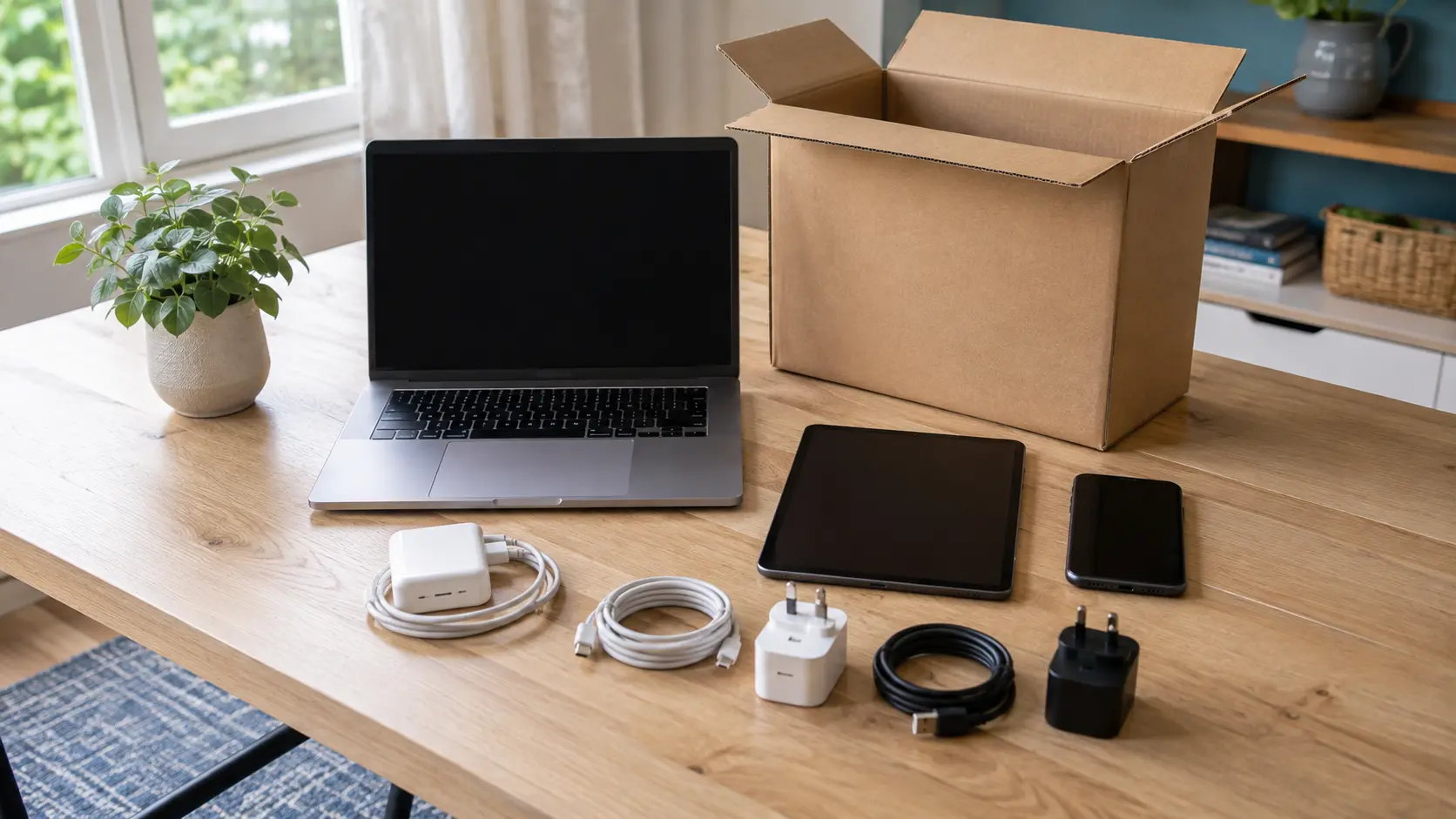
A practical decision framework that considers security, condition, usefulness and environmental responsibility.
Reuse when the device remains useful
A secure, functional device that still meets a real need may deliver more value through continued use. Account removal, data handling, testing and honest condition information are essential.
Repair when it extends useful life
A battery, storage or keyboard replacement may be sensible when the underlying device remains suitable. Consider parts, labour, energy efficiency, reliability and expected remaining life together.
Recover parts when the whole device is not viable
Compatible screens, memory, chargers and other components may help maintain other equipment. Parts recovery must still account for data-bearing components and damaged batteries.
Recycle at genuine end of life
Devices that cannot be used, repaired or safely stripped should follow an appropriate material-recovery route. Ask how mixed equipment and hazardous components are handled.
Avoid unsupported environmental claims
Choose providers that explain their process and limitations. Certification, carbon and diversion claims should be supported by evidence relevant to the actual service, not used as decoration.
Have a real equipment question?
Tell us what you have and what outcome matters to you.
Start an enquiry